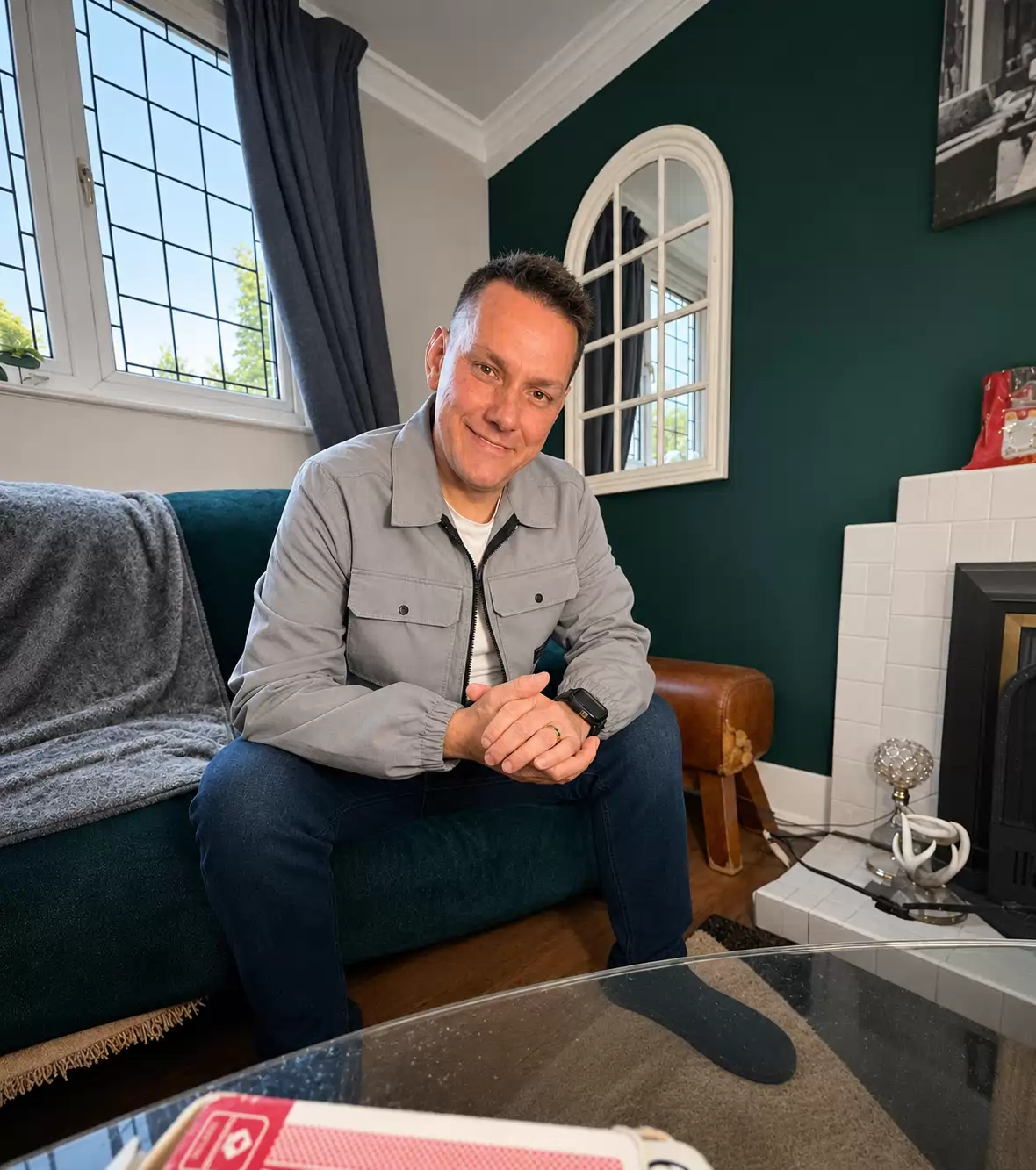
Warren Meyers has spent more than twenty years writing, singing and producing dance records, with multiple number ones in the UK, Asia and the US. As JD Rox he mixes the attitude of early Hip House with modern tech house. He sells under several aliases on HitVocals and is the platform's top seller.
We asked how he works, what his secret is and what he'd tell other artists.
When did you stop seeing HitVocals as a side outlet and start running it like a business?
Pretty early, if I'm honest. I was writing for briefs and Asian projects, but my passion was always dance and club music. I started uploading to HitVocals a couple of years ago and soon got a few bites from big clients, which filled me with excitement. I knew that if I dedicated myself to this, I could make it work.
If you want it to pay regularly, you have to give it the discipline and focus you'd give any other business.
So now I treat this as a business and I take it seriously. I set aside recording days and admin days. Pricing, descriptions and replying to producers are all part of the job. There's nothing wrong with doing it for fun, but if you want it to pay regularly, you have to give it the discipline and focus you'd give any other business.
Before you record a new vocal, how do you decide what to make?
I always listen and study before I write. Doing the homework is essential. Every week I go through club charts and listen to the latest sets from top DJs and labels. Usually the biggest clients want something fresh that stands out and is on trend, yet slightly different. So I try to figure out where things are heading: whether tempos are getting faster, which genres are rising or what vocal tones and styles are working.
As I said, doing the homework is key. Write the record you love by all means, but if you want to sell, you have to understand what buyers are looking for and shape your creativity around that.
What do you think about AI tools like Suno?
The technology is undeniably impressive, and I have dabbled with it. In fact, if I'm being completely honest, I nearly got hooked on it. Thankfully, I pulled myself back. It doesn't take long before you start noticing the same familiar patterns, and after a while it somehow leaves you feeling empty inside, almost like you're cheating. And the toplines soon start sounding generic.
Now I'm back to doing everything 100% myself, and I think that's what keeps my work sounding unique, which is ultimately what clients are looking for. I'm really glad HitVocals shares that same human-only mentality.
Do you sell on other platforms or only HitVocals?
Only HitVocals. I've worked with HitVocals since before the web platform existed, so I know how well connected and respected they are with the top DJs. That's a dream for me, because it saves me pitching songs around by hand. I get to focus on the part I enjoy most, which is creating. Everything else is handled by the platform and the great team.
I've heard horror stories about other platforms, and in this business you need people around you that you can trust. Also, my style leans towards dance and club, so HitVocals is the natural fit for my toplines.
How do you A&R your own work to keep the quality high?
It has to pass two tests. Would I be happy hearing it in a club next to a major label release? And would a producer be excited to start a new session around this vocal and carry that buzz through to a release?
I think I'm a very good judge of whether my songs have it or not, but they still go through the HitVocals review process too. The team is usually spot-on with their feedback, and it always helps me get the very best results.
How do you record and engineer your own vocals?
My home studio is modest, but I have a decent mic and basic acoustic treatment, so I can get a clear, dry sound. That matters when you're providing stems to clients. I don't always sing every song myself, and I often work with other vocalists to get the product right.
Mostly I engineer and mix the vocals myself, including the backing tracks for the demos. We're making vocal products, so I take pride in the finished result. I also take time to prepare the stems and label them properly, which gives the client a good experience when they start work on the finished project.
What's the most important tip for selling regularly?
There are only three things that matter: research, quality and consistency. Each one matters as much as the others. Some artists upload a couple of songs, then stop and wonder why they aren't selling. Aim to upload at least one song a month, ideally one a week. The bigger your catalogue, the more chances each vocal has of reaching the right client.
I also notice that clients often favourite a track quickly when I first upload it, then buy it weeks later. So you can't sit around and wait for sales. You have to keep looking forward and work on new material. I aim to make each song better than the last. Some will sell straight away and some will take a while, but as long as the quality is there, they will sell.
And if sales don't come, go back to the research. Does the vocal fit the market right now? Could the backing track do with a modern rework? Should I chop or twist the vocal into something brand new?
If you started on HitVocals from zero tomorrow, what would you do in your first few months?
I'd spend the first few days on research only. I'd pick a couple of genres I can sing or write for convincingly and get to know them properly. I'd also work with a handful of trusted vocalists with different tones and styles, so we could put out more material without it getting stale or samey.
Then I'd think about licensing. I'd start with a good spread of licence types, including non-exclusive and exclusive, plus some covers. Then I'd see what works best and what starts selling, and go from there.
There are only three things that matter: research, quality and consistency.
Any final advice for other artists on HitVocals?
It comes back to research, quality and consistency. I find that, like most things in life, what we get back matches the energy we put in. The more seriously you treat it as a viable business, the more you'll get out of it. If you're casual or half-hearted about it, you will struggle.
For me personally it's a dream platform. It's a golden opportunity to get songs to the best names in the business while I focus on the parts I love most. The platform keeps getting better and its client network is growing all the time. I'm grateful it exists, and I'm grabbing it with both hands.
Warren's checklist
- Research before every session. Know what DJs are playing and what's missing on HitVocals.
- Have an aim. Have an idea of the genre, tempo and vibe before you write.
- Make it session-ready. Clean, dry takes with stems, lyrics and properly named files.
- Upload to a schedule. At least one song a month, ideally one a week. Stick to it religiously.
- Look professional. A real photo, your best artist URL, a proper bio and sensible pricing.
- Don't be scared to change course. Do more of what works and drop what doesn't.
- Inspire clients. No client wants to sound like someone else. They want to sound fresh, so inspire them.
Photo courtesy of JD Rox. Hear more at jdrox.com.